Best E-commerce Platforms for Dropshipping Tested (2026)
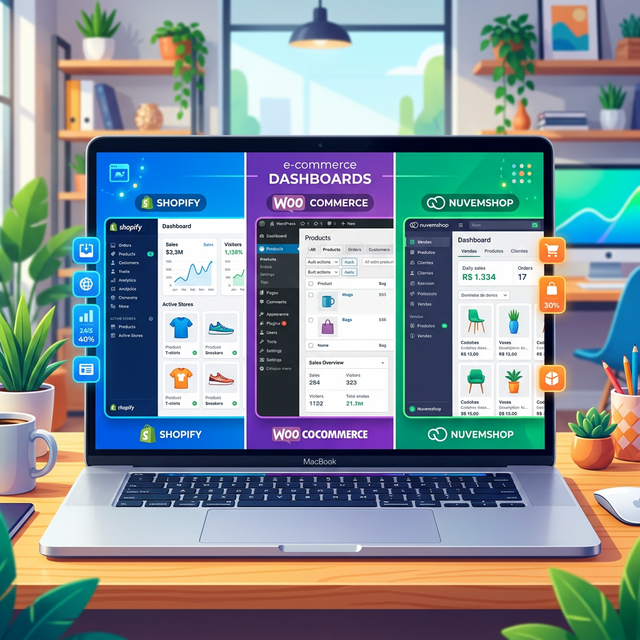
If you are just starting your dropshipping journey, the system you choose to host your store will make or break your ability to scale. Your e-commerce platform dictactes your monthly overhead, how easily you can automate order fulfillments, and what payment gateways you can offer your customers.
In 2026, the landscape has shifted. While Shopify remains the 800-pound gorilla, platforms like WooCommerce and regional powerhouses like Nuvemshop have carved out massive, highly profitable niches.
We tested the top sistemas de dropshipping to answer the ultimate question: Which is the best e-commerce platform for dropshipping this year?
1. Shopify: The Undisputed Global Leader
When people think of dropshipping, they think of Shopify. There is a reason almost every single top-tier dropshipping operator on YouTube recommends it.
Why Shopify Wins
- An App Ecosystem Built for Dropshipping: Finding a supplier and automatically importing their products takes two clicks. Every major supplier platform—from Zendrop to CJ Dropshipping—has a native Shopify integration that handles inventory sync and automatic tracking updates.
- Conversion-Optimized Checkouts: Shopify’s checkout flow is arguably the highest-converting checkout in the world. As we discussed in our guide on reducing cart abandonment, a friction-less checkout is non-negotiable.
- Shopify Payments: Built-in credit card processing means you don’t have to navigate the nightmare of setting up third-party high-risk merchant accounts on day one.
The Drawbacks
Shopify is becoming expensive. The basic plan starts at $39/month, and premium apps for reviews, upsells, and email marketing will rapidly push your monthly overhead to $100+ before you make a single sale.
2. Nuvemshop: The King of Latin American Dropshipping
If you are targeting Brazil, Argentina, or Mexico, Nuvemshop (known as Tiendanube in Spanish-speaking markets) is the undisputed champion.
Why Nuvemshop Wins
- Hyper-Localized Solutions: Latin America has complex logistics and payment preferences (e.g., Pix or Boleto in Brazil). Nuvemshop natively integrates with Mercado Pago, Moip, and local logistical solutions like Correios and Loggi out of the box.
- Cost-Effective Scaling: Their plans are considerably cheaper than Shopify in local currency, making it the perfect site de dropshipping to validate a product without burning US dollars on overhead.
- Supplier Integrations in LATAM: Dropshipping in Brazil usually requires connecting with fornecedores locais to avoid 30-day wait times from China. Nuvemshop integrates flawlessly with solutions like Dropi to connect you directly to local suppliers. (To learn more about finding local networks, read our guide on finding reliable dropshipping suppliers).
The Drawbacks
If you are planning to eventually branch out to Reverse Dropshipping and target the US or European markets, Nuvemshop’s ecosystem isn’t designed for cross-border global scaling the way Shopify’s is.
3. WooCommerce: The Developer’s Playground
WooCommerce is not a standalone platform; it’s a free e-commerce plugin for WordPress.
Why WooCommerce Wins
- 100% Ownership: When you use Shopify, you are renting server space. If Shopify deems your products “high-risk,” they can shut your store down instantly. With WooCommerce, you own the store, the code, and the database. You just host it yourself on SiteGround or AWS.
- Insanely Low Overhead: The plugin is entirely free. A basic high-speed WordPress hosting plan costs $5 to $10 a month.
- Uncapped SEO Capabilities: Because it runs on WordPress, WooCommerce gives you ultimate technical SEO control, allowing you to build aggressive organic traffic architectures.
The Drawbacks
- High Maintenance: You are responsible for security patches, SSL certificates, and fixing broken plugin updates.
- Lack of Native Support: If your checkout breaks at 3 AM during a massive Black Friday Facebook Ads push, there is no WooCommerce “live chat support” to fix it for you. You have to fix the code yourself or hire a developer.
4. Wix E-Commerce: Good for Beginners, Bad for Scaling
Wix has heavily upgraded their e-commerce functionality in recent years. Using their App Market, you can easily connect dropshipping integration tools like Modalyst or Spocket.
Why Wix Wins
- Next-Level Drag and Drop: Wix’s builder is completely unstructured, meaning you can drag elements exactly where you want them down to the pixel.
The Drawbacks
- Performance: Wix sites are notoriously bloated and slow. In the dropshipping space, every second of lag kills your ROI.
- Terrible Scaling Mechanics: As your inventory grows, managing complex variations and massive product catalogs in Wix becomes incredibly tedious compared to Shopify’s bulk-editing systems.
The Final Verdict
- Choose Shopify if you have a baseline budget of $150/month and want the easiest, most proven global dropshipping ecosystem.
- Choose Nuvemshop (Tiendanube) if you live in or exclusively target Latin America and need local payment and shipping infrastructure.
- Choose WooCommerce if you are technical, want to avoid massive monthly SaaS fees, and demand 100% ownership over your data.
Whatever platform you choose, remember that the software is just a tool. The real determining factors of success will always represent how well you understand your target market and the aggressiveness of your ad creative testing framework.
Frequently Asked Questions
Which e-commerce platform is best for dropshipping?
Shopify is globally considered the best overall platform due to its massive app ecosystem, built-in payment processing, and seamless integrations with suppliers like Zendrop and AutoDS. However, WooCommerce is best for those wanting 100% control, while Nuvemshop dominates the Latin American market.
Is Nuvemshop good for dropshipping?
Yes, Nuvemshop (Nubecommerce) is highly recommended for dropshipping in Latin America, especially Brazil and Argentina. It integrates with regional suppliers, local payment gateways like Mercado Pago, and shipping solutions.
Can I do dropshipping on WooCommerce?
Absolutely. WooCommerce is a free WordPress plugin. While hosting costs money, you avoid monthly Shopify subscription fees. Using plugins like AliDropship or connecting direct APIs to suppliers makes WooCommerce a highly scalable and cost-effective option.